

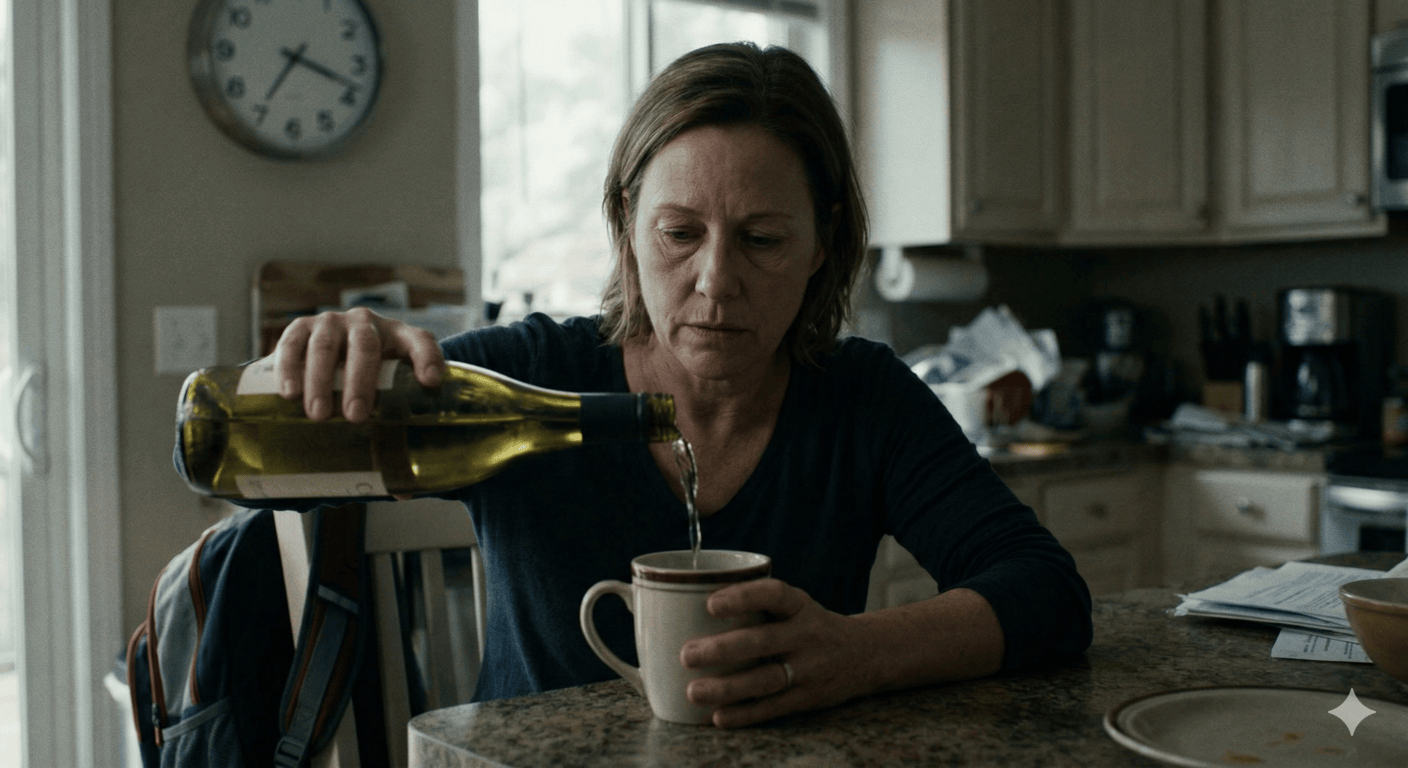
It wasn't a dramatic moment. There was no intervention, no flashing lights, no ambulance. It was a Tuesday. I was pouring white wine into a coffee mug at half past three in the afternoon because the kids were due home from school and I didn't want them to see a wine glass on the counter. That was it. That was my rock bottom — not a cliff edge, but a slow, quiet slide into a person I didn't recognise.
The Performance
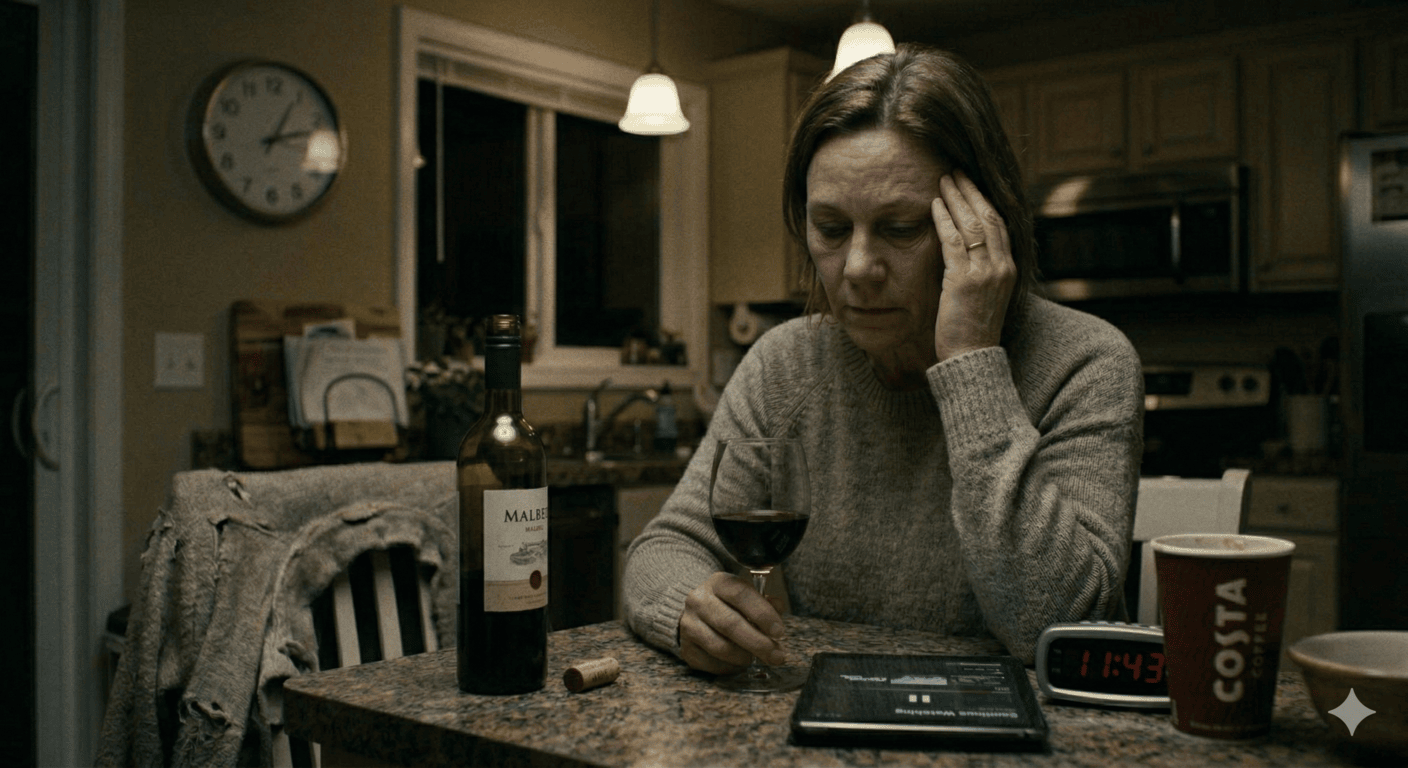
I'd been performing for years. Performing 'fine'. Performing 'just tired'. Performing 'I only drink at weekends' while hiding the recycling so the neighbours wouldn't count the bottles. I became so good at the performance that I almost believed it myself. Almost. But there's a difference between fooling everyone else and fooling yourself, and that gap gets wider every single day until you can't bridge it anymore.
You're not broken. You're just honest now.
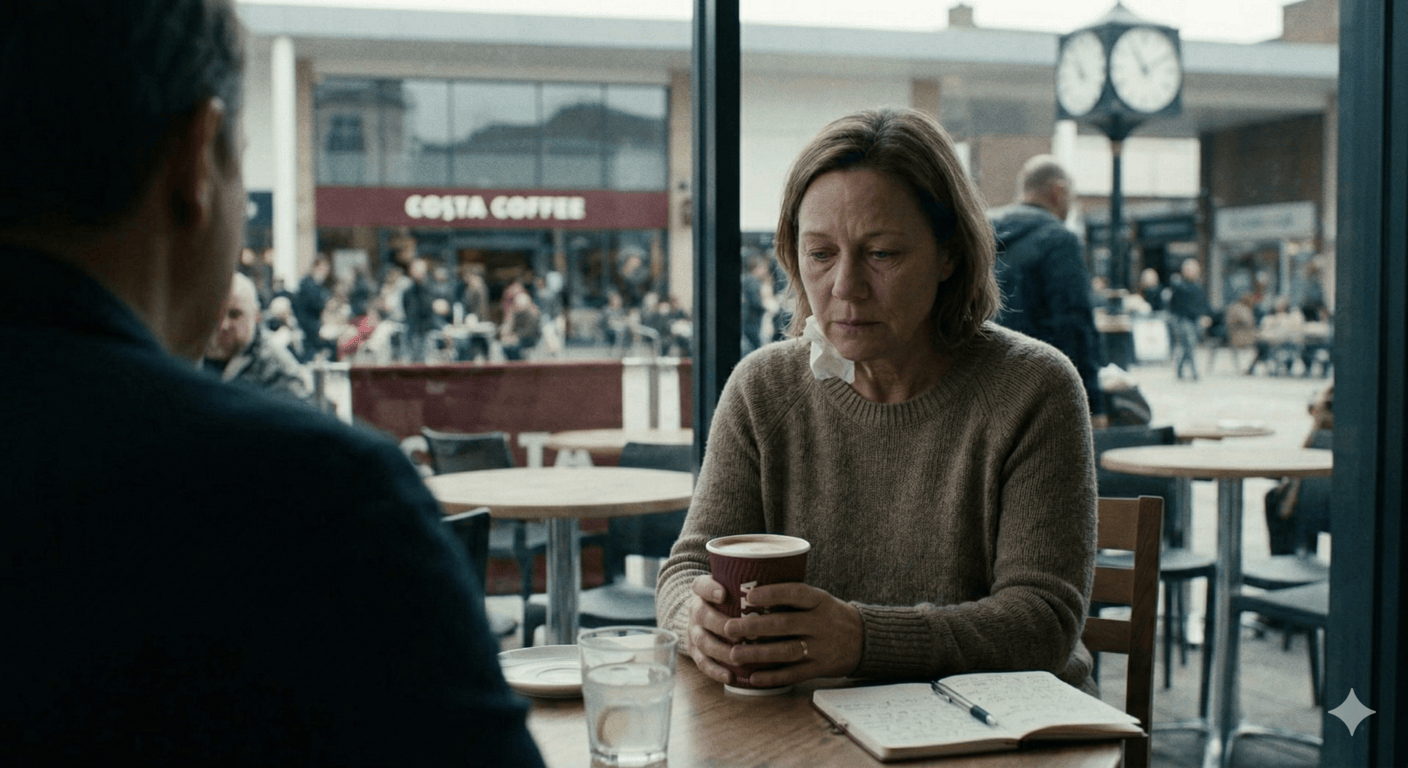
My sister said that to me three weeks after I told her. I'd been expecting judgement, lectures, disappointment. Instead she held my hand in a Costa Coffee and said five words that broke me open in the best possible way. I cried into a flat white for twenty minutes while a woman at the next table pretended not to notice.
What Admitting It Actually Feels Like
People think admitting you have a problem is the hardest part. It's not. The hardest part is the morning after you admit it, when you wake up and the problem is still there but now you can't pretend it isn't. The comfort blanket of denial gets ripped away and you're left standing in the cold, blinking, wondering what the hell you do now.
But here's what I've learned since that Tuesday afternoon with the coffee mug: admitting it doesn't fix anything immediately, but it does something even more important. It makes you visible. Not to other people — to yourself. For the first time in years, I could see myself clearly. And yes, the view was rough. But at least it was real.
Comments (3)